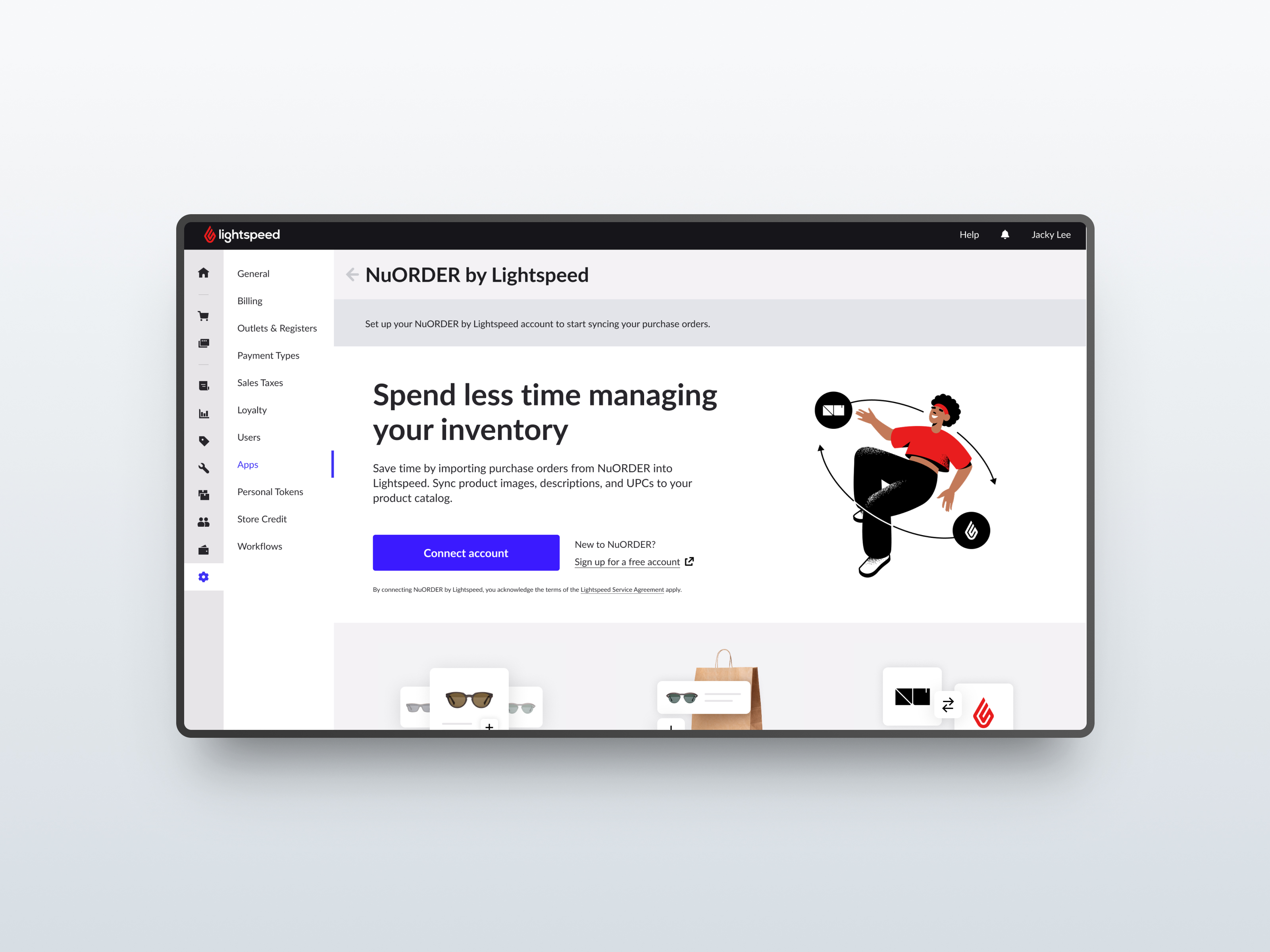
NuORDER integration for Lightspeed Retail
Improved the NuORDER Lightspeed integration to reduce connection friction, increase adoption and unlock scalable value across the wholesale network.
Role: Lead Product Designer
Scope: Led end-to-end design from discovery through delivery across account linking, multi-buyer support and auto-connection, partnering with product, engineering, data and GTM teams.
Impact:
- 57% lower churn among merchants using the integration compared to non-integrated merchants
- Increased linked accounts from 771 → 1,100 after initial experience improvements
- Accelerated adoption with auto-linking, surpassing 1,800 connected accounts (+238% in a single quarter)
- Unlocked downstream value across wholesale ordering, catalog sync and network monetisation
View case study

Overview
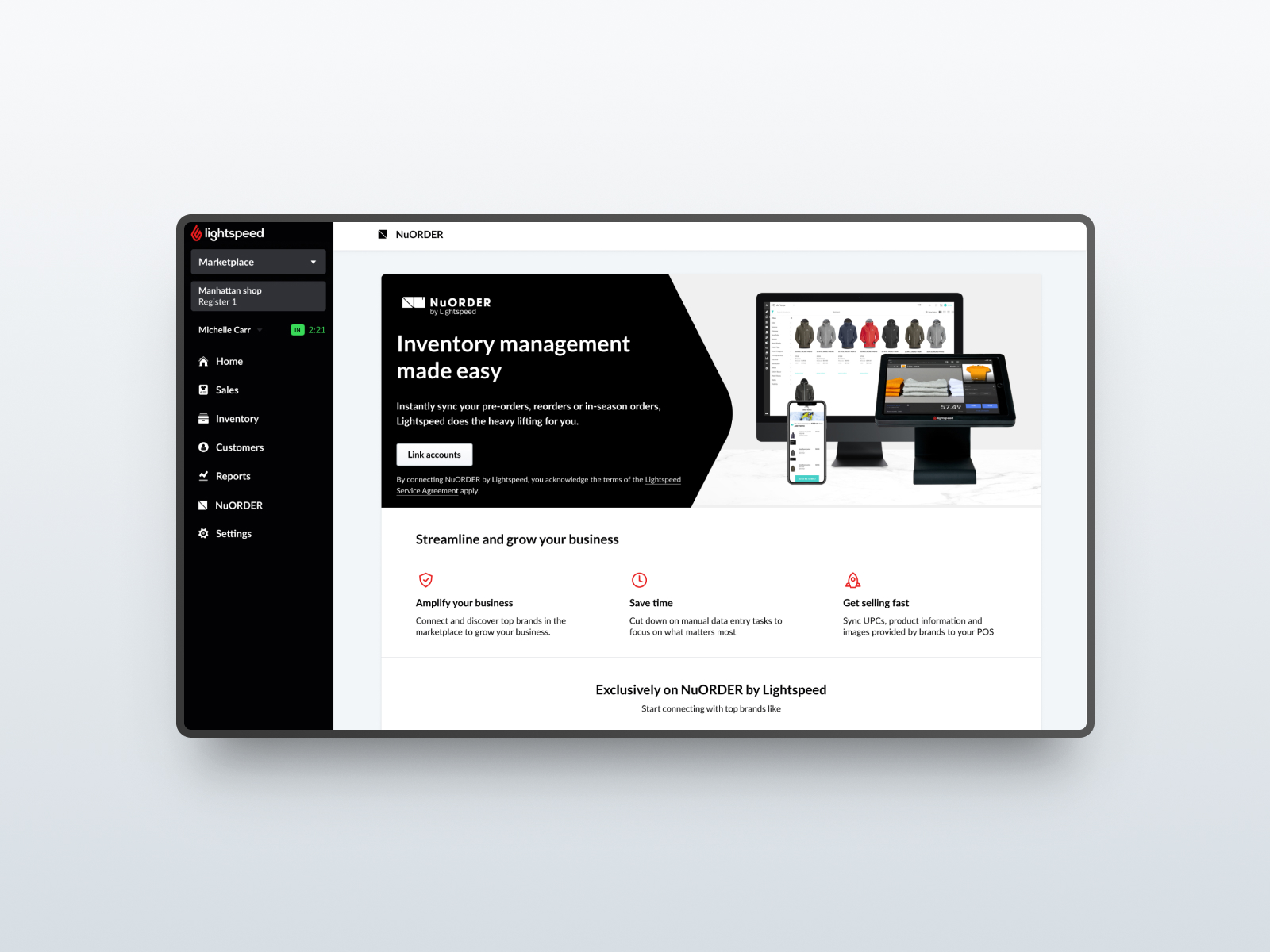
The NuORDER Lightspeed integration connects wholesale ordering with point-of-sale, allowing merchants to pull purchase orders, sync product data and reduce manual catalog management.
While the integration delivered strong value once connected, adoption was extremely low. Most merchants dropped off before completing the linking flow, preventing Lightspeed from realising the full potential of the supplier network.
I led the redesign of the connection experience to reduce friction, clarify value and support real-world merchant structures leading to an increase in adoption while laying the groundwork for a scalable, monetisable network.
The problem we were solving
The supplier network was a strategic investment but adoption of the integration was extremely low.
While 4,000+ X-Series merchants had NuORDER accounts, only ~150 had successfully connected. Roughly 75% dropped off during the linking flow, limiting Lightspeed’s ability to prove network value, learn from usage or scale adoption.
The core issue wasn’t the product value. It was the experience of getting connected.
Key friction points
Analysis and merchant feedback revealed several structural blockers:
- A long, confusing linking flow with repeated logins and unclear terms
- Data-sharing language that eroded trust at the moment of decision
- Account structure mismatches - NuORDER treated each buyer as a merchant, blocking ~20% of eligible organisations
- No clear path for merchants without an existing NuORDER account, breaking momentum with external sign-up flows
Together, these issues created friction that outweighed perceived value.
Who this was for?
- 4,000+ merchants already using both Lightspeed Retail and NuORDER
- Wholesale brands benefiting from increased connected ordering
- Internal teams responsible for network growth, retention and monetisation
My role and influence
I was responsible for shaping the integration experience from discovery through delivery.
Scope included:
- Identified the highest-impact friction points across the connection journey
- Partnered closely with product and engineering to define a phased, low-risk rollout
- Worked with data and GTM teams to align design decisions with adoption and retention metrics
- Balanced technical, legal and business constraints while improving a critical system
Constraints and trade-offs
- Auto-provisioning new NuORDER accounts was intentionally out of scope initially
- Account structure limitations required interim solutions alongside longer-term fixes
- Changes needed to ship incrementally to prove impact quickly without destabilising the network
The focus was removing friction before expanding reach.
Design approach
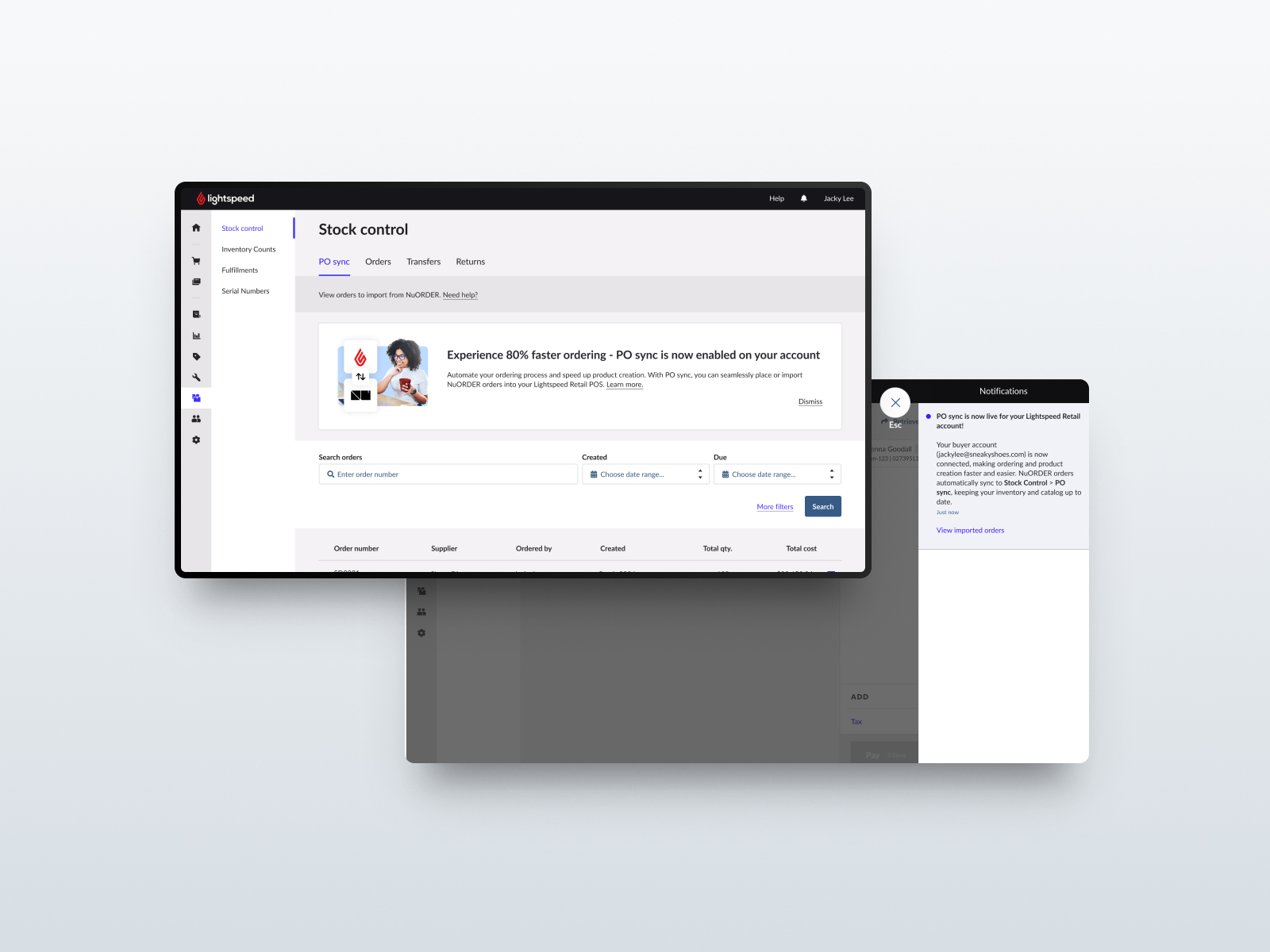
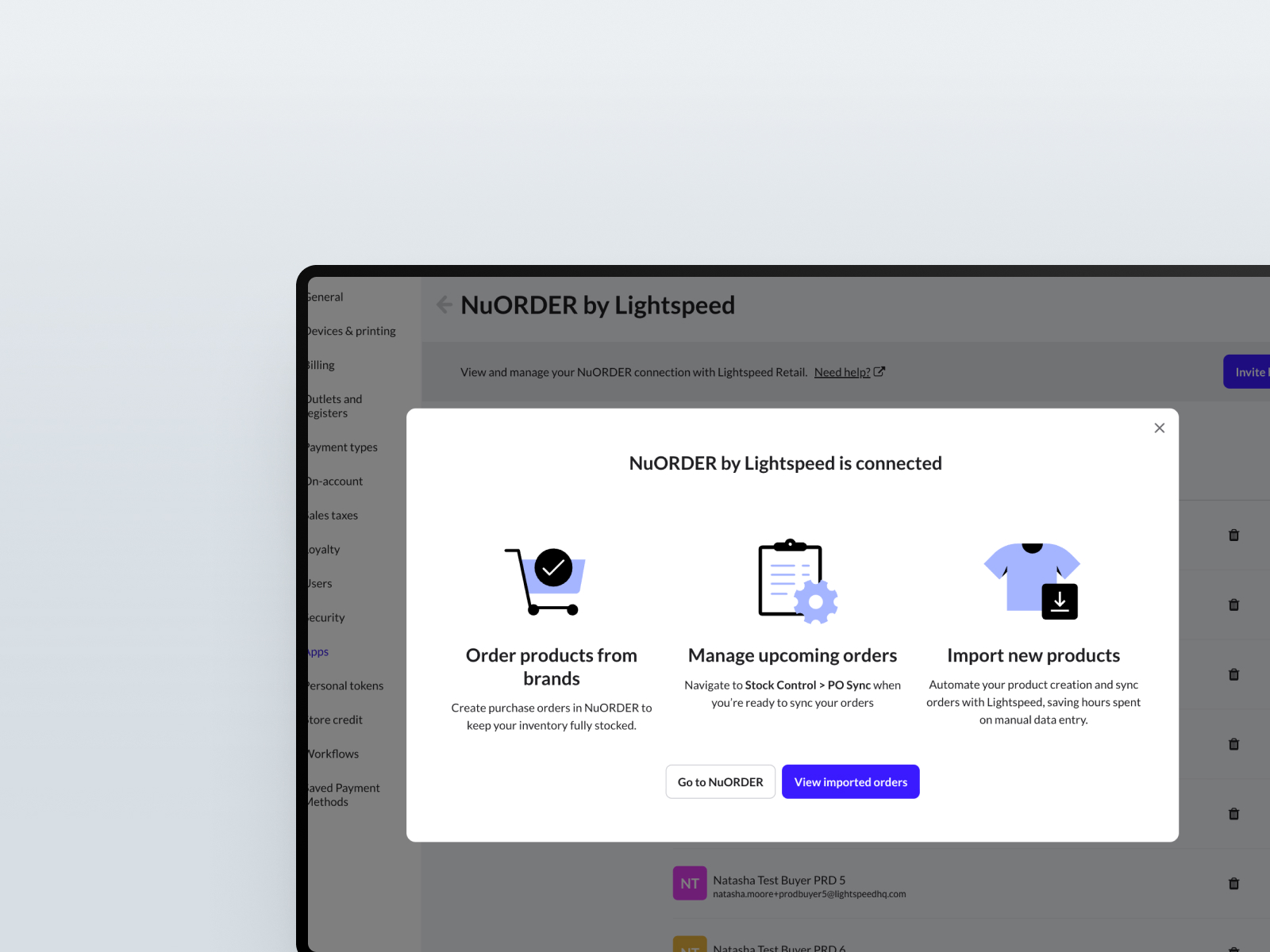
1. Simplify and clarify the connection experience
We reframed linking as a value decision, not a technical task:
- Clearer value framing inside POS
- Reduced steps and repeated logins
- Simplified, more transparent data-sharing language
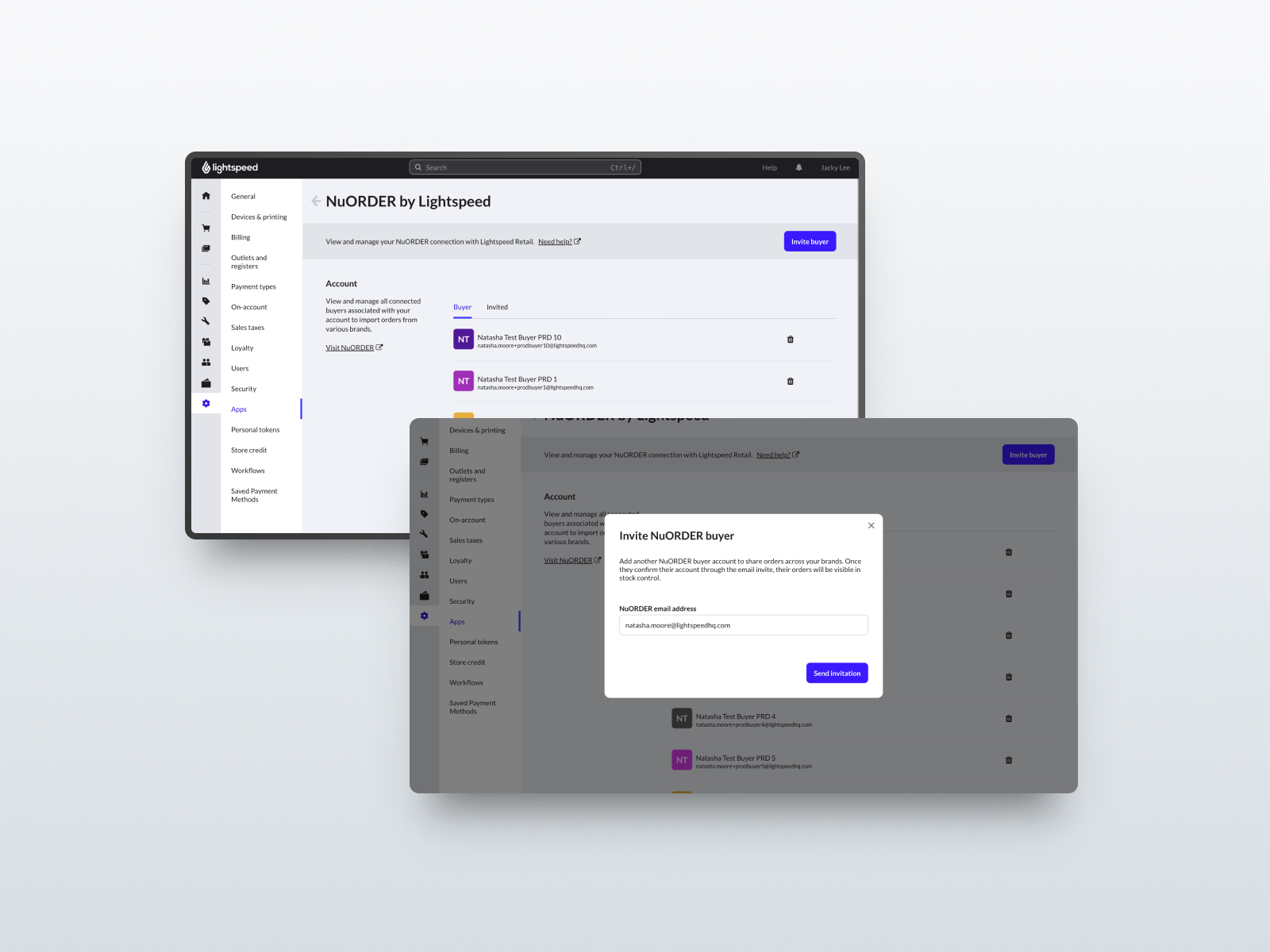
2. Support real merchant structures
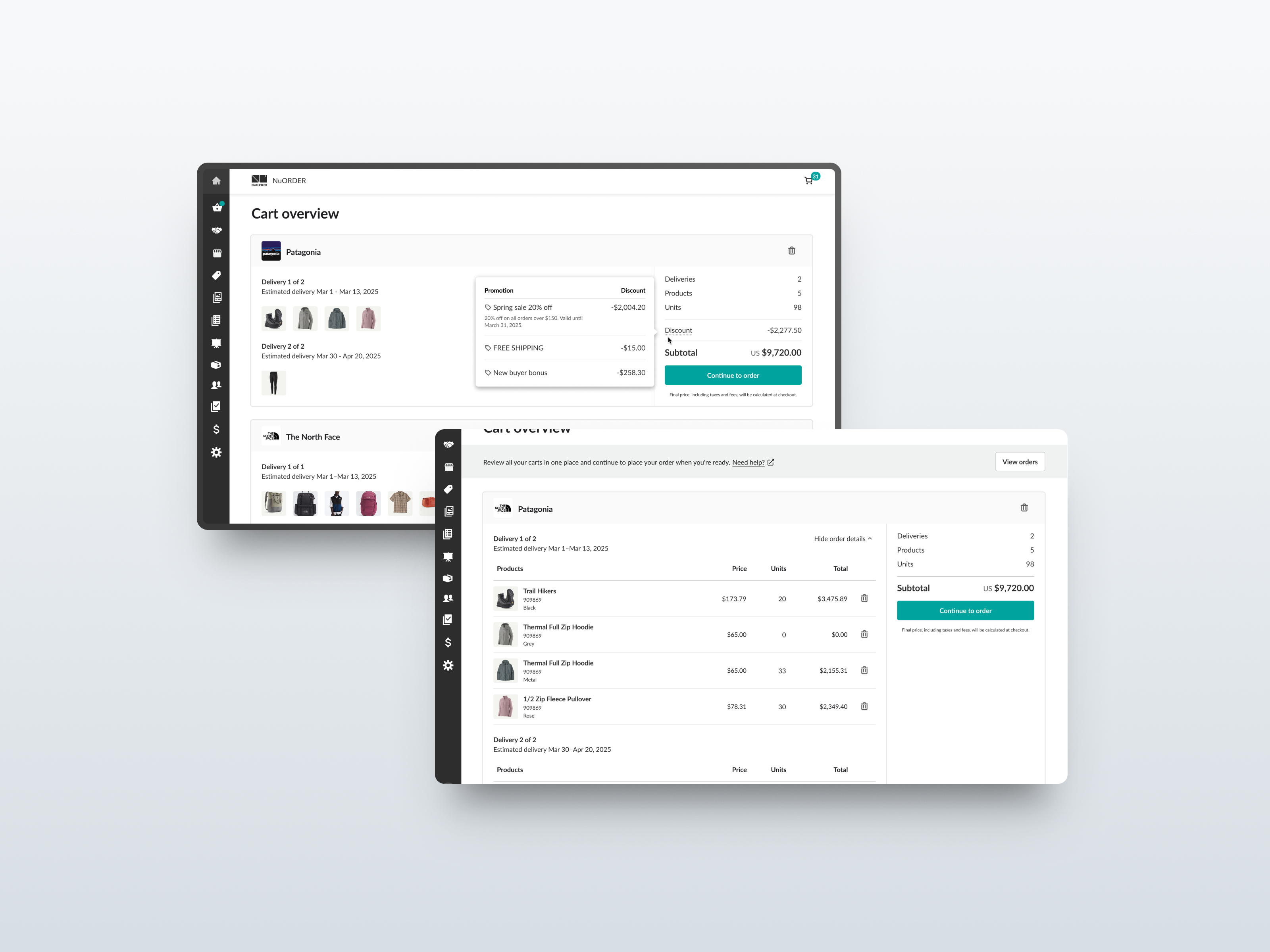
We introduced multi-buyer account linking, allowing organisations to connect multiple NuORDER buyer accounts and view purchase orders in one POS account, removing a major blocker for larger retailers.
3. Eliminate manual effort with auto-connection
Finally, we introduced auto-linking via email, allowing merchants to connect accounts without repeating the manual flow. This dramatically reduced friction and unlocked scale.
Outcomes
The results validated that friction, not value, was the primary barrier.
- Steady growth after initial improvements (771 → 1,100 connections)
- Rapid acceleration after auto-linking (1,800+ connections in one quarter)
- Connected merchants showed higher engagement, retention and purchase-order syncing across platforms
What this work unlocked
This work transformed the supplier network from a promising feature into a scalable system.
Unlocking:
- Enabled broader adoption across merchant segments
- Improved data quality and feedback loops between wholesale and POS
- Laid the foundation for monetisation, deeper brand participation and richer merchant insights
The integration became a durable competitive advantage rather than a one-off feature.
Reflection
This project strengthened my ability to design growth-critical systems, prioritise friction reduction over feature expansion and partner across product, data and GTM to drive adoption at scale.
View more:


NuORDER integration for Lightspeed Retail
Improved the NuORDER Lightspeed integration to reduce connection friction, increase adoption and unlock scalable value across the wholesale network.
Role: Lead Product Designer
Scope: Led end-to-end design from discovery through delivery across account linking, multi-buyer support and auto-connection, partnering with product, engineering, data and GTM teams.
Impact:
- 57% lower churn among merchants using the integration compared to non-integrated merchants
- Increased linked accounts from 771 → 1,100 after initial experience improvements
- Accelerated adoption with auto-linking, surpassing 1,800 connected accounts (+238% in a single quarter)
- Unlocked downstream value across wholesale ordering, catalog sync and network monetisation
View case study
Overview
The NuORDER Lightspeed integration connects wholesale ordering with point-of-sale, allowing merchants to pull purchase orders, sync product data and reduce manual catalog management.
While the integration delivered strong value once connected, adoption was extremely low. Most merchants dropped off before completing the linking flow, preventing Lightspeed from realising the full potential of the supplier network.
I led the redesign of the connection experience to reduce friction, clarify value and support real-world merchant structures leading to an increase in adoption while laying the groundwork for a scalable, monetisable network.
The problem we were solving
The supplier network was a strategic investment but adoption of the integration was extremely low.
While 4,000+ X-Series merchants had NuORDER accounts, only ~150 had successfully connected. Roughly 75% dropped off during the linking flow, limiting Lightspeed’s ability to prove network value, learn from usage or scale adoption.
The core issue wasn’t the product value. It was the experience of getting connected.
Key friction points
Analysis and merchant feedback revealed several structural blockers:
- A long, confusing linking flow with repeated logins and unclear terms
- Data-sharing language that eroded trust at the moment of decision
- Account structure mismatches - NuORDER treated each buyer as a merchant, blocking ~20% of eligible organisations
- No clear path for merchants without an existing NuORDER account, breaking momentum with external sign-up flows
Together, these issues created friction that outweighed perceived value.
Who this was for?
- 4,000+ merchants already using both Lightspeed Retail and NuORDER
- Wholesale brands benefiting from increased connected ordering
- Internal teams responsible for network growth, retention and monetisation
My role and influence
I was responsible for shaping the integration experience from discovery through delivery.
Scope included:
- Identified the highest-impact friction points across the connection journey
- Partnered closely with product and engineering to define a phased, low-risk rollout
- Worked with data and GTM teams to align design decisions with adoption and retention metrics
- Balanced technical, legal and business constraints while improving a critical system
Constraints and trade-offs
- Auto-provisioning new NuORDER accounts was intentionally out of scope initially
- Account structure limitations required interim solutions alongside longer-term fixes
- Changes needed to ship incrementally to prove impact quickly without destabilising the network
The focus was removing friction before expanding reach.
Design approach
1. Simplify and clarify the connection experience
We reframed linking as a value decision, not a technical task:
- Clearer value framing inside POS
- Reduced steps and repeated logins
- Simplified, more transparent data-sharing language
2. Support real merchant structures
We introduced multi-buyer account linking, allowing organisations to connect multiple NuORDER buyer accounts and view purchase orders in one POS account, removing a major blocker for larger retailers.
3. Eliminate manual effort with auto-connection
Finally, we introduced auto-linking via email, allowing merchants to connect accounts without repeating the manual flow. This dramatically reduced friction and unlocked scale.
Outcomes
The results validated that friction, not value, was the primary barrier.
- Steady growth after initial improvements (771 → 1,100 connections)
- Rapid acceleration after auto-linking (1,800+ connections in one quarter)
- Connected merchants showed higher engagement, retention and purchase-order syncing across platforms
What this work unlocked
This work transformed the supplier network from a promising feature into a scalable system.
Unlocking:
- Enabled broader adoption across merchant segments
- Improved data quality and feedback loops between wholesale and POS
- Laid the foundation for monetisation, deeper brand participation and richer merchant insights
The integration became a durable competitive advantage rather than a one-off feature.
Reflection
This project strengthened my ability to design growth-critical systems, prioritise friction reduction over feature expansion and partner across product, data and GTM to drive adoption at scale.
View more:

NuORDER integration for Lightspeed Retail
Improved the NuORDER Lightspeed integration to reduce connection friction, increase adoption and unlock scalable value across the wholesale network.
Role: Lead Product Designer
Scope: Led end-to-end design from discovery through delivery across account linking, multi-buyer support and auto-connection, partnering with product, engineering, data and GTM teams.
Impact:
- 57% lower churn among merchants using the integration compared to non-integrated merchants
- Increased linked accounts from 771 → 1,100 after initial experience improvements
- Accelerated adoption with auto-linking, surpassing 1,800 connected accounts (+238% in a single quarter)
- Unlocked downstream value across wholesale ordering, catalog sync and network monetisation
View case study
Overview
The NuORDER Lightspeed integration connects wholesale ordering with point-of-sale, allowing merchants to pull purchase orders, sync product data and reduce manual catalog management.
While the integration delivered strong value once connected, adoption was extremely low. Most merchants dropped off before completing the linking flow, preventing Lightspeed from realising the full potential of the supplier network.
I led the redesign of the connection experience to reduce friction, clarify value and support real-world merchant structures leading to an increase in adoption while laying the groundwork for a scalable, monetisable network.
The problem we were solving
The supplier network was a strategic investment but adoption of the integration was extremely low.
While 4,000+ X-Series merchants had NuORDER accounts, only ~150 had successfully connected. Roughly 75% dropped off during the linking flow, limiting Lightspeed’s ability to prove network value, learn from usage or scale adoption.
The core issue wasn’t the product value. It was the experience of getting connected.
Key friction points
Analysis and merchant feedback revealed several structural blockers:
- A long, confusing linking flow with repeated logins and unclear terms
- Data-sharing language that eroded trust at the moment of decision
- Account structure mismatches - NuORDER treated each buyer as a merchant, blocking ~20% of eligible organisations
- No clear path for merchants without an existing NuORDER account, breaking momentum with external sign-up flows
Together, these issues created friction that outweighed perceived value.
Who this was for?
- 4,000+ merchants already using both Lightspeed Retail and NuORDER
- Wholesale brands benefiting from increased connected ordering
- Internal teams responsible for network growth, retention and monetisation
My role and influence
I was responsible for shaping the integration experience from discovery through delivery.
Scope included:
- Identified the highest-impact friction points across the connection journey
- Partnered closely with product and engineering to define a phased, low-risk rollout
- Worked with data and GTM teams to align design decisions with adoption and retention metrics
- Balanced technical, legal and business constraints while improving a critical system
Constraints and trade-offs
- Auto-provisioning new NuORDER accounts was intentionally out of scope initially
- Account structure limitations required interim solutions alongside longer-term fixes
- Changes needed to ship incrementally to prove impact quickly without destabilising the network
The focus was removing friction before expanding reach.
Design approach
1. Simplify and clarify the connection experience
We reframed linking as a value decision, not a technical task:
- Clearer value framing inside POS
- Reduced steps and repeated logins
- Simplified, more transparent data-sharing language
2. Support real merchant structures
We introduced multi-buyer account linking, allowing organisations to connect multiple NuORDER buyer accounts and view purchase orders in one POS account, removing a major blocker for larger retailers.
3. Eliminate manual effort with auto-connection
Finally, we introduced auto-linking via email, allowing merchants to connect accounts without repeating the manual flow. This dramatically reduced friction and unlocked scale.
Outcomes
The results validated that friction, not value, was the primary barrier.
- Steady growth after initial improvements (771 → 1,100 connections)
- Rapid acceleration after auto-linking (1,800+ connections in one quarter)
- Connected merchants showed higher engagement, retention and purchase-order syncing across platforms
What this work unlocked
This work transformed the supplier network from a promising feature into a scalable system.
Unlocking:
- Enabled broader adoption across merchant segments
- Improved data quality and feedback loops between wholesale and POS
- Laid the foundation for monetisation, deeper brand participation and richer merchant insights
The integration became a durable competitive advantage rather than a one-off feature.
Reflection
This project strengthened my ability to design growth-critical systems, prioritise friction reduction over feature expansion and partner across product, data and GTM to drive adoption at scale.
View more: