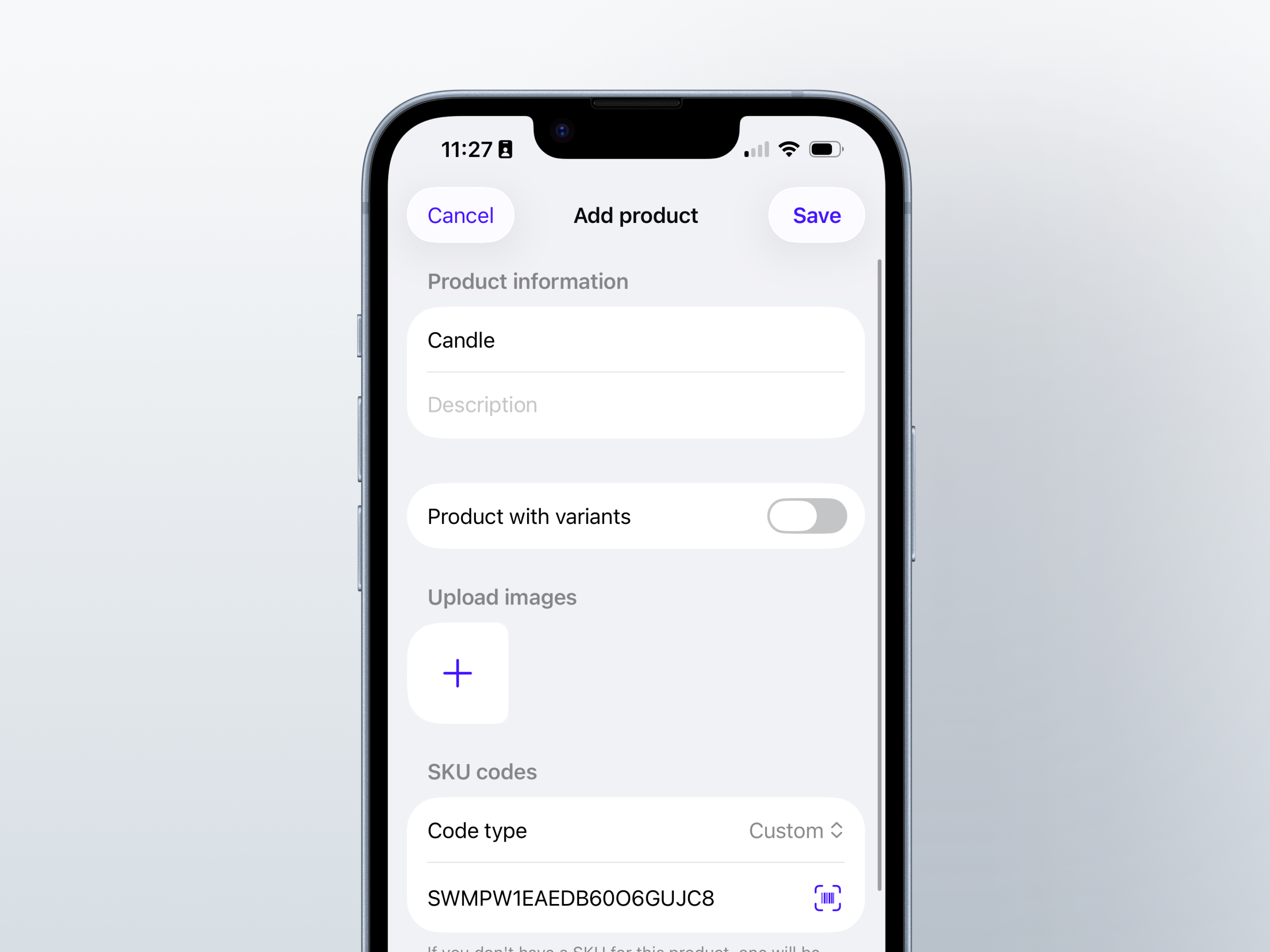
Add product
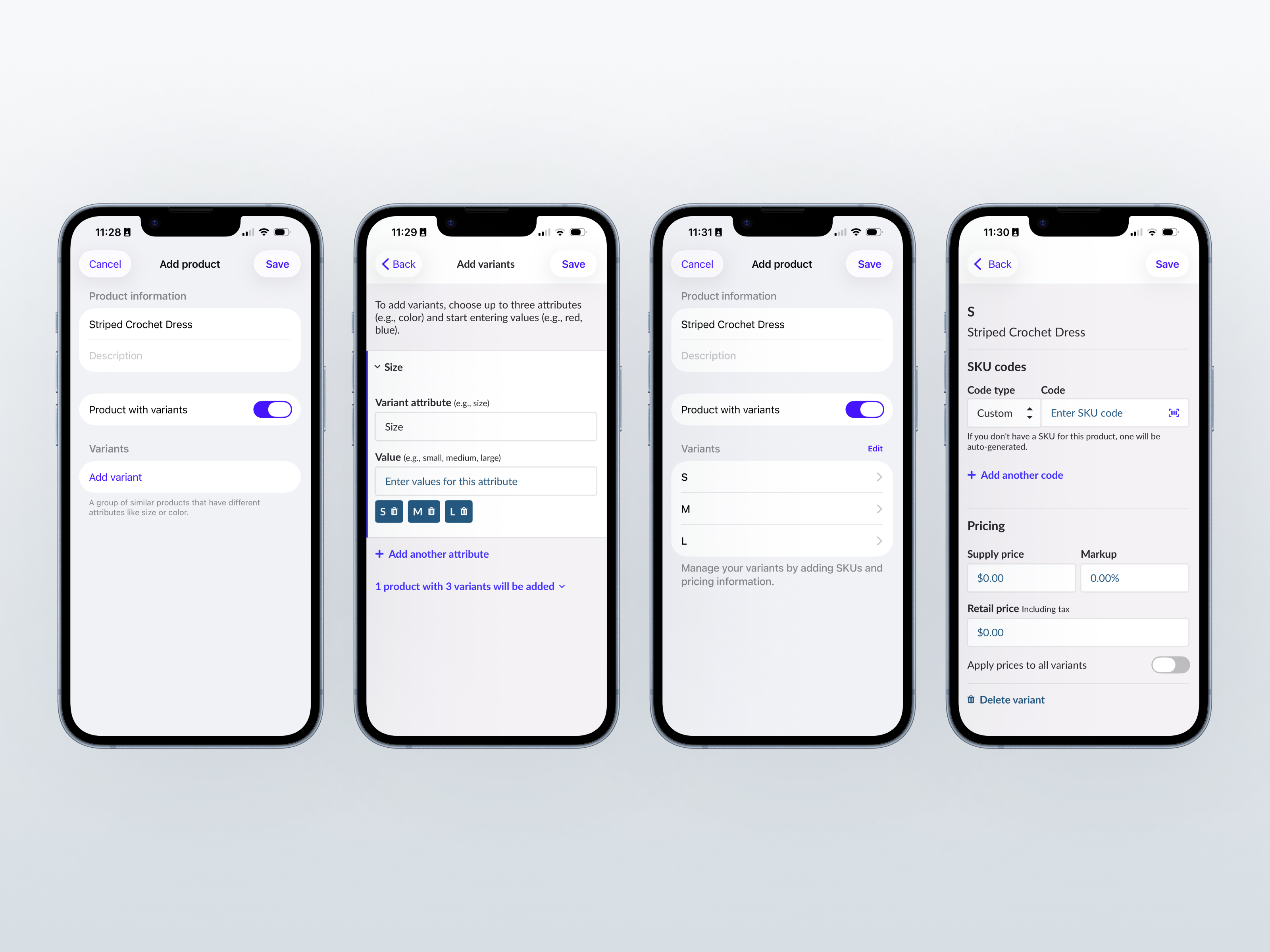
Add product for Scanner helps merchants quickly create products from the shop floor using their mobile device, reducing setup friction and speeding up time to first sale.
Role: Lead Product Designer
Scope: Led end-to-end design from discovery through delivery across mobile workflows, partnering closely with product and engineering.
Impact:
- 4,200+ products created in the first month through mobile product entry
- Reduced time-to-first sale by enabling products to be created and sold within minutes of receiving inventory
- Strong early adoption among new merchants, with 6 of the top 10 users newly activated to POS
View case study


Overview
Add Product for Scanner allows merchants to quickly create products directly from the shop floor using their mobile device.
For merchants new to point of sale, digitising a product catalogue is one of the biggest barriers to getting set up and selling. This feature simplified that process by enabling barcode scanning and capturing only the critical information needed to start selling immediately.
Mobile add product was one of the most requested features for Scanner and became a foundational workflow for onboarding and in-store operations.
The problem we were solving
For merchants new to POS, digitising a product catalogue is one of the biggest barriers to getting started.
Most merchants already had the required information in-store (SKU, name, price), but the existing product creation flow was designed for desktop, required 40+ data points and assumed the merchant had access to all supplier catalogues/historical invoices.
This created a significant speed bump:
- Merchants felt overwhelmed before they could even sell
- Mobile workflows were slow, error-prone, and not designed for touch
- Many merchants delayed setup or relied on secondary devices
How might we help merchants digitise their product catalogue accurately and confidently using only a mobile device?
150 products were added via this workflow on mobile devices daily so we knew this was worth solving for.
Who this was for?
Merchants new to point of sale, going through onboarding and setting up their catalogue for the first time.These merchants:
- Operate directly from tablets or phones
- Don’t have product data neatly organised in one place
- Need to get selling quickly to see value
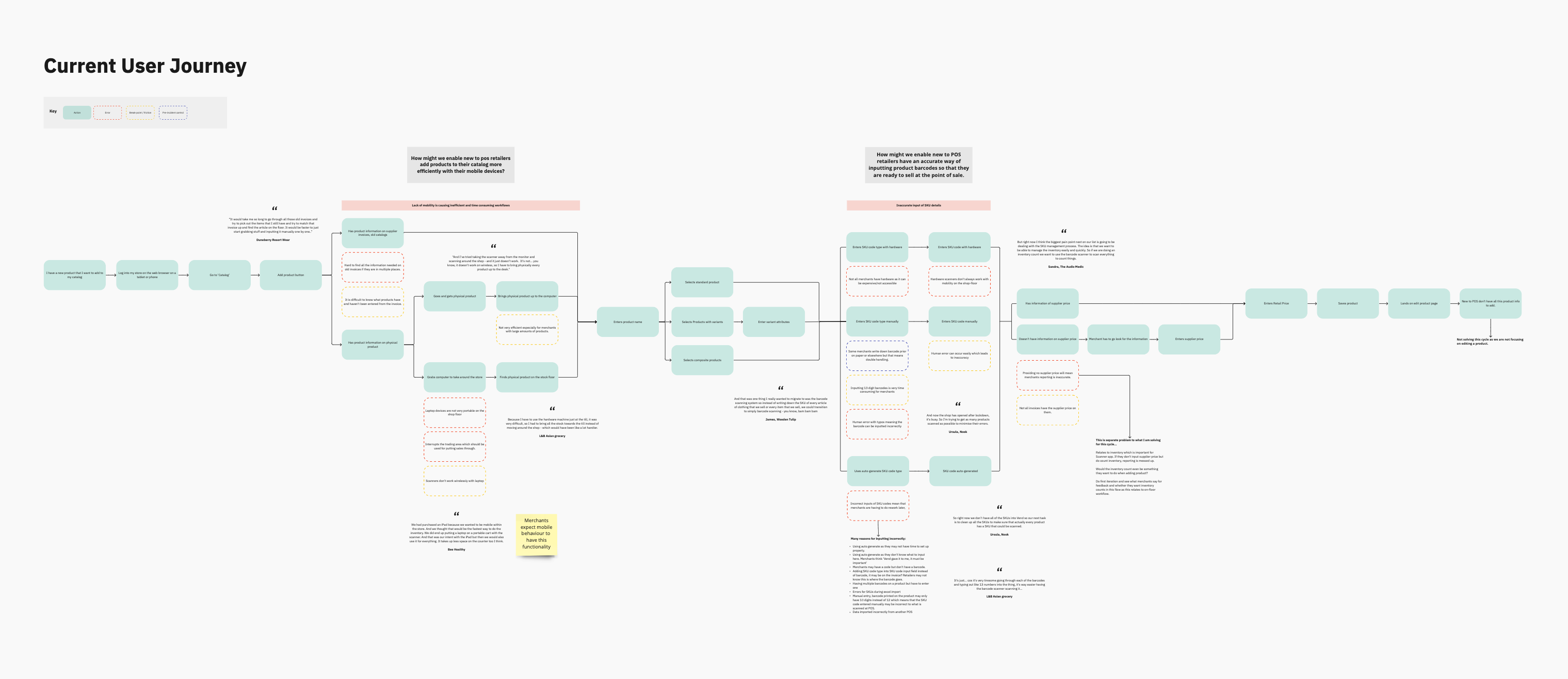
Mapping out the user journeys in problem discovery
My role and influence
I led the end-to-end mobile experience for Add Product, with a focus on real on the shop-floor workflows.
Some responsibilities included:
- Owned discovery, interaction design, usability testing, and delivery
- Partnered with product to define success metrics, assumptions, and rollout strategy
- Worked closely with engineering to design scalable mobile patterns within an existing desktop-first data model
- Validated workflows with both new and tenured merchants through research and testing
Scope and key constraints
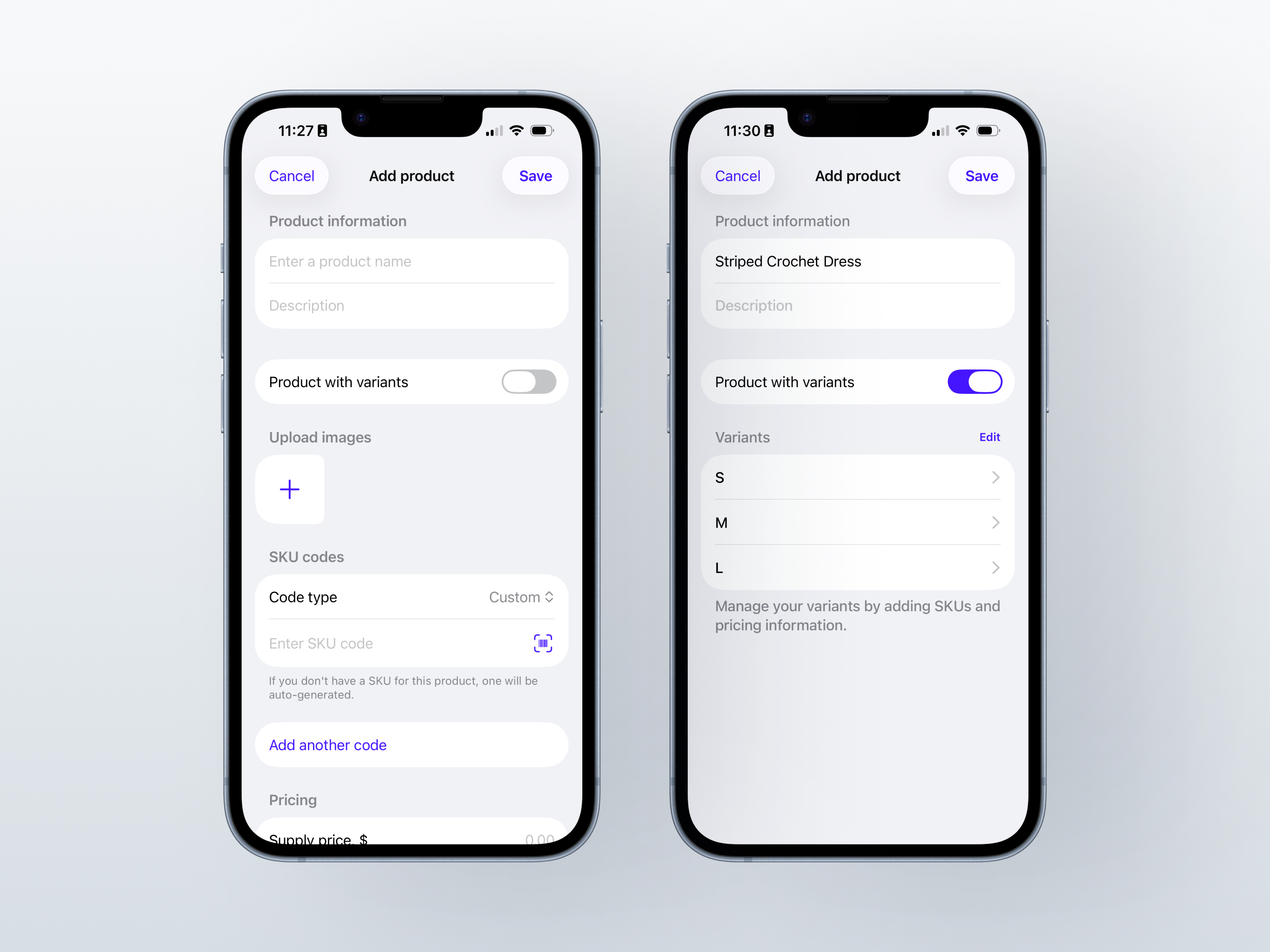
The work was intentionally scoped into two releases, allowing us to deliver value quickly and learn from merchant beahviour before expanding complexity.
- Standard products (6 weeks)
- Products with variants (6 weeks)
This allowed us to:
- Deliver value quickly
- Learn from real merchant behaviour
- Reduce risk before expanding complexity
Key constraints included:
- Existing data model assumptions built for desktop
- Mobile accessibility and touch ergonomics
- Barcode scanning reliability across devices
Key insights
1. Mobile product entry was fundamentally brokenThe existing flow was not responsive, required excessive scrolling and made progress unclear - increasing errors and abandonment.
2. Merchants didn’t want “perfect products” - they wanted to sellMerchants weren’t trying to create complete records. They wanted products in the system, scannable at POS and ready to sell immediately.This reframed the problem from data completeness to time-to-value.”I have to use the hardward machine at the till, it was very difficult, so I had to bring all the stock towards the till instead of moving around the shop - which would have been a lot handier.” - L&B Asian Grocer
Design approach
Capture only what’s required to sell
We reduced required fields to the minimum needed to identify, price and scan a product. Everything else could be added later without impacting selling or reporting.
Design for movement, not forms
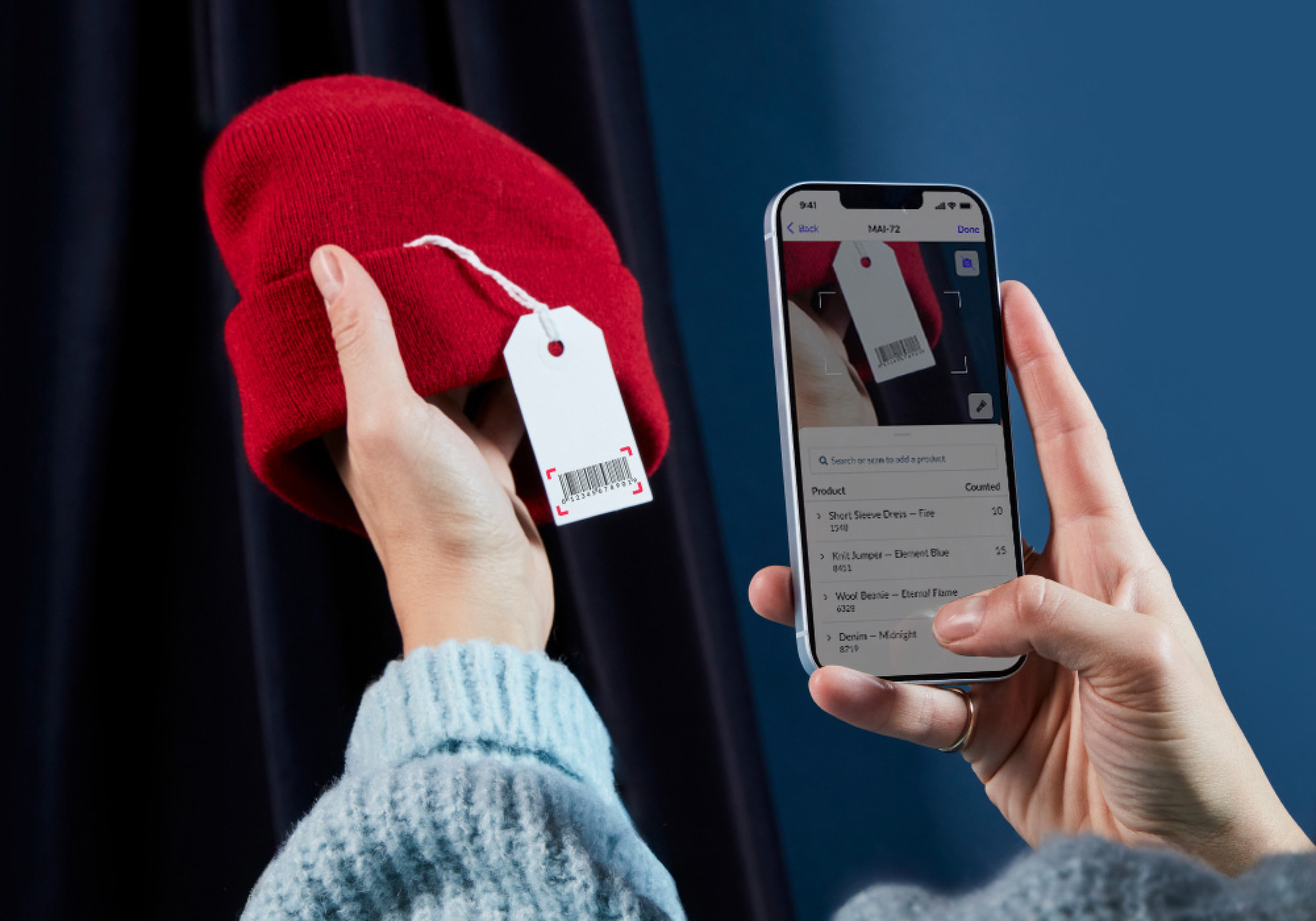
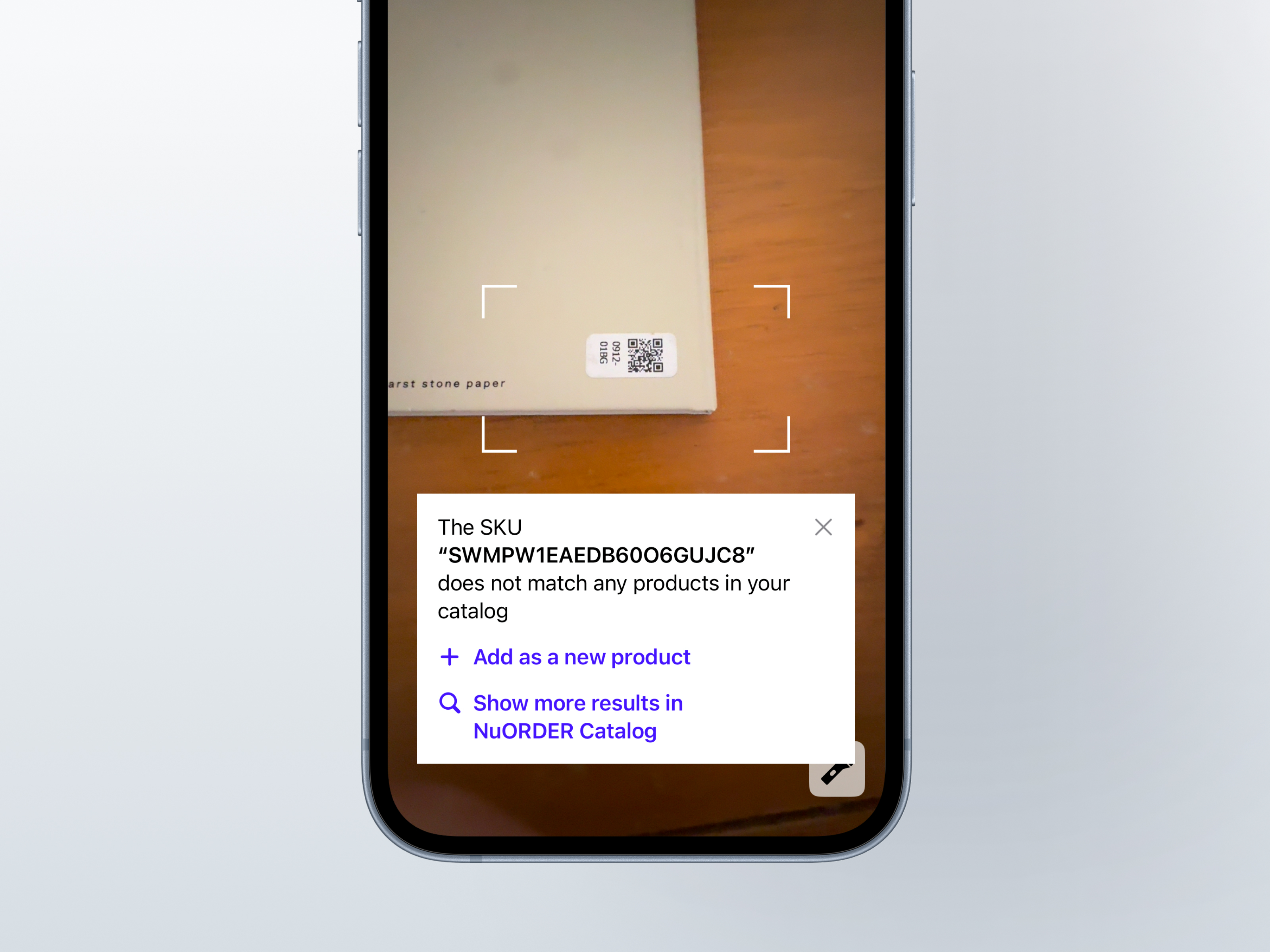
Product creation was designed around walking the shop floor. Barcode scanning became the entry point, not a shortcut.
Ship, learn, expand
We launched standard products first, validated behaviour, then expanded to variants once we understood where merchants struggled.
Iteration and expansion
After launch, we quickly learned that Add Product wasn’t just an onboarding tool, it became critical during inventory receiving.
Merchants receiving new stock in Scanner were blocked if products didn’t yet exist, forcing them to stop, switch devices, or delay recieving.
We mapped current vs ideal receiving journeys and identified Add Product as a key unblocker in this flow.
Despite ~300 merchants receiving inventory monthly in Scanner, only 49 were using Add Product which signalled a discovery and integration opportunity rather than a value problem.
Merchants receiving stock were blocked if products didn’t yet exist, forcing them to stop, switch devices, or delay selling. Despite ~300 merchants receiving inventory monthly in Scanner, only 49 were using Add Product — signalling a discovery and integration gap, not a value problem.
This reframed Add Product as a key unblocker in in-store receiving workflows, not just setup.
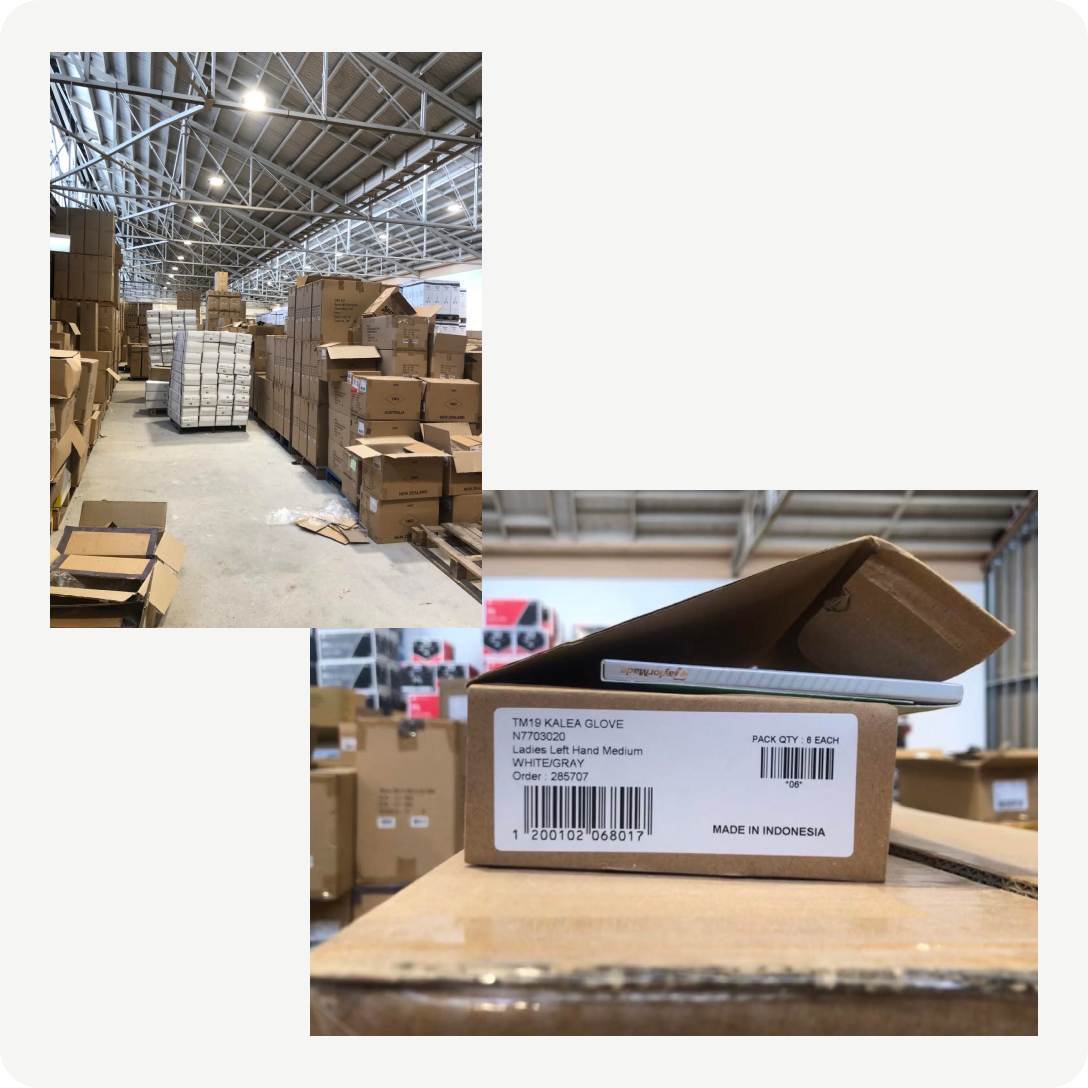
Images taken from a site visit to a customer to understand their warehouse operations
Outcomes
Add Product shifted product setup from a blocking task to an enabling workflow.
Early impact
- Merchants added products in high volumes directly from the shop floor
- 6 of the top 10 users were newly activated merchants
- Existing merchants also adopted the feature, reflecting Scanner’s tenured user base
“I had something come in the next day, and I tried it out. The fact that I was able to sell whatever came in that day, I scanned it with my phone, and was able to sell it right within two minutes - you know what I mean? It was awesome. And that’s why I like using it now.” - Joe from Rich’s Rock n Roll
Learnings
- Merchants clearly understood the value of speed and immediacy
- Standard products saw strong adoption
- Products with variants had lower usage (~12%), prompting further discovery
- Editing and richer product details emerged as next-step opportunities
What this work unlocked
Add Product reduced time-to-value for new merchants, supported real in-store behaviour and established a scalable mobile pattern for future catalogue and inventory features.
It reframed onboarding not as configuration, but as getting to your first sale faster.
Reflection
Looking back, this project strengthened my ability to design for real-world workflows, prioritise time-to-value and make trade-offs that balanced data integrity with speed and usability.
View more:


Add product
Add product for Scanner helps merchants quickly create products from the shop floor using their mobile device, reducing setup friction and speeding up time to first sale.
Role: Lead Product Designer
Scope: Led end-to-end design from discovery through delivery across mobile workflows, partnering closely with product and engineering.
Impact:
- 4,200+ products created in the first month through mobile product entry
- Reduced time-to-first sale by enabling products to be created and sold within minutes of receiving inventory
- Strong early adoption among new merchants, with 6 of the top 10 users newly activated to POS
View case study
Overview
Add Product for Scanner allows merchants to quickly create products directly from the shop floor using their mobile device.
For merchants new to point of sale, digitising a product catalogue is one of the biggest barriers to getting set up and selling. This feature simplified that process by enabling barcode scanning and capturing only the critical information needed to start selling immediately.
Mobile add product was one of the most requested features for Scanner and became a foundational workflow for onboarding and in-store operations.
The problem we were solving
For merchants new to POS, digitising a product catalogue is one of the biggest barriers to getting started.
Most merchants already had the required information in-store (SKU, name, price), but the existing product creation flow was designed for desktop, required 40+ data points and assumed the merchant had access to all supplier catalogues/historical invoices.
This created a significant speed bump:
- Merchants felt overwhelmed before they could even sell
- Mobile workflows were slow, error-prone, and not designed for touch
- Many merchants delayed setup or relied on secondary devices
How might we help merchants digitise their product catalogue accurately and confidently using only a mobile device?
150 products were added via this workflow on mobile devices daily so we knew this was worth solving for.
Who this was for?
Merchants new to point of sale, going through onboarding and setting up their catalogue for the first time.These merchants:
- Operate directly from tablets or phones
- Don’t have product data neatly organised in one place
- Need to get selling quickly to see value
Mapping out the user journeys in problem discovery
My role and influence
I led the end-to-end mobile experience for Add Product, with a focus on real on the shop-floor workflows.
Some responsibilities included:
- Owned discovery, interaction design, usability testing, and delivery
- Partnered with product to define success metrics, assumptions, and rollout strategy
- Worked closely with engineering to design scalable mobile patterns within an existing desktop-first data model
- Validated workflows with both new and tenured merchants through research and testing
Scope and key constraints
The work was intentionally scoped into two releases, allowing us to deliver value quickly and learn from merchant beahviour before expanding complexity.
- Standard products (6 weeks)
- Products with variants (6 weeks)
This allowed us to:
- Deliver value quickly
- Learn from real merchant behaviour
- Reduce risk before expanding complexity
Key constraints included:
- Existing data model assumptions built for desktop
- Mobile accessibility and touch ergonomics
- Barcode scanning reliability across devices
Key insights
1. Mobile product entry was fundamentally brokenThe existing flow was not responsive, required excessive scrolling and made progress unclear - increasing errors and abandonment.
2. Merchants didn’t want “perfect products” - they wanted to sellMerchants weren’t trying to create complete records. They wanted products in the system, scannable at POS and ready to sell immediately.This reframed the problem from data completeness to time-to-value.”I have to use the hardward machine at the till, it was very difficult, so I had to bring all the stock towards the till instead of moving around the shop - which would have been a lot handier.” - L&B Asian Grocer
Design approach
Capture only what’s required to sell
We reduced required fields to the minimum needed to identify, price and scan a product. Everything else could be added later without impacting selling or reporting.
Design for movement, not forms
Product creation was designed around walking the shop floor. Barcode scanning became the entry point, not a shortcut.
Ship, learn, expand
We launched standard products first, validated behaviour, then expanded to variants once we understood where merchants struggled.
Iteration and expansion
After launch, we quickly learned that Add Product wasn’t just an onboarding tool, it became critical during inventory receiving.
Merchants receiving new stock in Scanner were blocked if products didn’t yet exist, forcing them to stop, switch devices, or delay recieving.
We mapped current vs ideal receiving journeys and identified Add Product as a key unblocker in this flow.
Despite ~300 merchants receiving inventory monthly in Scanner, only 49 were using Add Product which signalled a discovery and integration opportunity rather than a value problem.
Merchants receiving stock were blocked if products didn’t yet exist, forcing them to stop, switch devices, or delay selling. Despite ~300 merchants receiving inventory monthly in Scanner, only 49 were using Add Product — signalling a discovery and integration gap, not a value problem.
This reframed Add Product as a key unblocker in in-store receiving workflows, not just setup.
Images taken from a site visit to a customer to understand their warehouse operations
Outcomes
Add Product shifted product setup from a blocking task to an enabling workflow.
Early impact
- Merchants added products in high volumes directly from the shop floor
- 6 of the top 10 users were newly activated merchants
- Existing merchants also adopted the feature, reflecting Scanner’s tenured user base
“I had something come in the next day, and I tried it out. The fact that I was able to sell whatever came in that day, I scanned it with my phone, and was able to sell it right within two minutes - you know what I mean? It was awesome. And that’s why I like using it now.” - Joe from Rich’s Rock n Roll
Learnings
- Merchants clearly understood the value of speed and immediacy
- Standard products saw strong adoption
- Products with variants had lower usage (~12%), prompting further discovery
- Editing and richer product details emerged as next-step opportunities
What this work unlocked
Add Product reduced time-to-value for new merchants, supported real in-store behaviour and established a scalable mobile pattern for future catalogue and inventory features.
It reframed onboarding not as configuration, but as getting to your first sale faster.
Reflection
Looking back, this project strengthened my ability to design for real-world workflows, prioritise time-to-value and make trade-offs that balanced data integrity with speed and usability.
View more:

Add product
Add product for Scanner helps merchants quickly create products from the shop floor using their mobile device, reducing setup friction and speeding up time to first sale.
Role: Lead Product Designer
Scope: Led end-to-end design from discovery through delivery across mobile workflows, partnering closely with product and engineering.
Impact:
- 4,200+ products created in the first month through mobile product entry
- Reduced time-to-first sale by enabling products to be created and sold within minutes of receiving inventory
- Strong early adoption among new merchants, with 6 of the top 10 users newly activated to POS
View case study
Overview
Add Product for Scanner allows merchants to quickly create products directly from the shop floor using their mobile device.
For merchants new to point of sale, digitising a product catalogue is one of the biggest barriers to getting set up and selling. This feature simplified that process by enabling barcode scanning and capturing only the critical information needed to start selling immediately.
Mobile add product was one of the most requested features for Scanner and became a foundational workflow for onboarding and in-store operations.
The problem we were solving
For merchants new to POS, digitising a product catalogue is one of the biggest barriers to getting started.
Most merchants already had the required information in-store (SKU, name, price), but the existing product creation flow was designed for desktop, required 40+ data points and assumed the merchant had access to all supplier catalogues/historical invoices.
This created a significant speed bump:
- Merchants felt overwhelmed before they could even sell
- Mobile workflows were slow, error-prone, and not designed for touch
- Many merchants delayed setup or relied on secondary devices
How might we help merchants digitise their product catalogue accurately and confidently using only a mobile device?
150 products were added via this workflow on mobile devices daily so we knew this was worth solving for.
Who this was for?
Merchants new to point of sale, going through onboarding and setting up their catalogue for the first time.These merchants:
- Operate directly from tablets or phones
- Don’t have product data neatly organised in one place
- Need to get selling quickly to see value
Mapping out the user journeys in problem discovery
My role and influence
I led the end-to-end mobile experience for Add Product, with a focus on real on the shop-floor workflows.
Some responsibilities included:
- Owned discovery, interaction design, usability testing, and delivery
- Partnered with product to define success metrics, assumptions, and rollout strategy
- Worked closely with engineering to design scalable mobile patterns within an existing desktop-first data model
- Validated workflows with both new and tenured merchants through research and testing
Scope and key constraints
The work was intentionally scoped into two releases, allowing us to deliver value quickly and learn from merchant behaviour before expanding complexity.
- Standard products (6 weeks)
- Products with variants (6 weeks)
Key constraints included:
- Existing data model assumptions built for desktop
- Mobile accessibility and touch ergonomics
- Barcode scanning reliability across devices
Key insights
1. Mobile product entry was fundamentally brokenThe existing flow was not responsive, required excessive scrolling and made progress unclear - increasing errors and abandonment.
2. Merchants didn’t want “perfect products” - they wanted to sellMerchants weren’t trying to create complete records. They wanted products in the system, scannable at POS and ready to sell immediately.This reframed the problem from data completeness to time-to-value.”I have to use the hardware machine at the till, it was very difficult, so I had to bring all the stock towards the till instead of moving around the shop - which would have been a lot handier.” - L&B Asian Grocer
Design approach
Capture only what’s required to sell
We reduced required fields to the minimum needed to identify, price and scan a product. Everything else could be added later without impacting selling or reporting.
Design for movement, not forms
Product creation was designed around walking the shop floor. Barcode scanning became the entry point, not a shortcut.
Ship, learn, expand
We launched standard products first, validated behaviour, then expanded to variants once we understood where merchants struggled.
Iteration and expansion
After launch, we quickly learned that Add Product wasn’t just an onboarding tool, it became critical during inventory receiving.
Merchants receiving new stock in Scanner were blocked if products didn’t yet exist, forcing them to stop, switch devices, or delay receiving.
Despite ~300 merchants receiving inventory monthly in Scanner, only 49 were using Add Product which signalled there was an opportunity to incorporate this workflow into receiving.
This reframed Add Product as a key unblocker in in-store receiving workflows, not just setup.
Images taken from a site visit to a customer to understand their warehouse operations
Outcomes
Add Product shifted product setup from a blocking task to an enabling workflow.
Early impact
- Merchants added products in high volumes directly from the shop floor
- 6 of the top 10 users were newly activated merchants
- Existing merchants also adopted the feature, reflecting Scanner’s tenured user base
“I had something come in the next day, and I tried it out. The fact that I was able to sell whatever came in that day, I scanned it with my phone, and was able to sell it right within two minutes - you know what I mean? It was awesome. And that’s why I like using it now.” - Joe from Rich’s Rock n Roll
Learnings
- Merchants clearly understood the value of speed and immediacy
- Standard products saw strong adoption
- Products with variants had lower usage (~12%), prompting further discovery
- Editing and richer product details emerged as next-step opportunities
What this work unlocked
Add Product reduced time-to-value for new merchants, supported real in-store behaviour and established a scalable mobile pattern for future catalogue and inventory features.
It reframed onboarding not as configuration, but as getting to your first sale faster.
Reflection
Looking back, this project strengthened my ability to design for real-world workflows, prioritise time-to-value and make trade-offs that balanced data integrity with speed and usability.
View more: